Spongebob 3D: Success, Art Style, and Top Similar Games
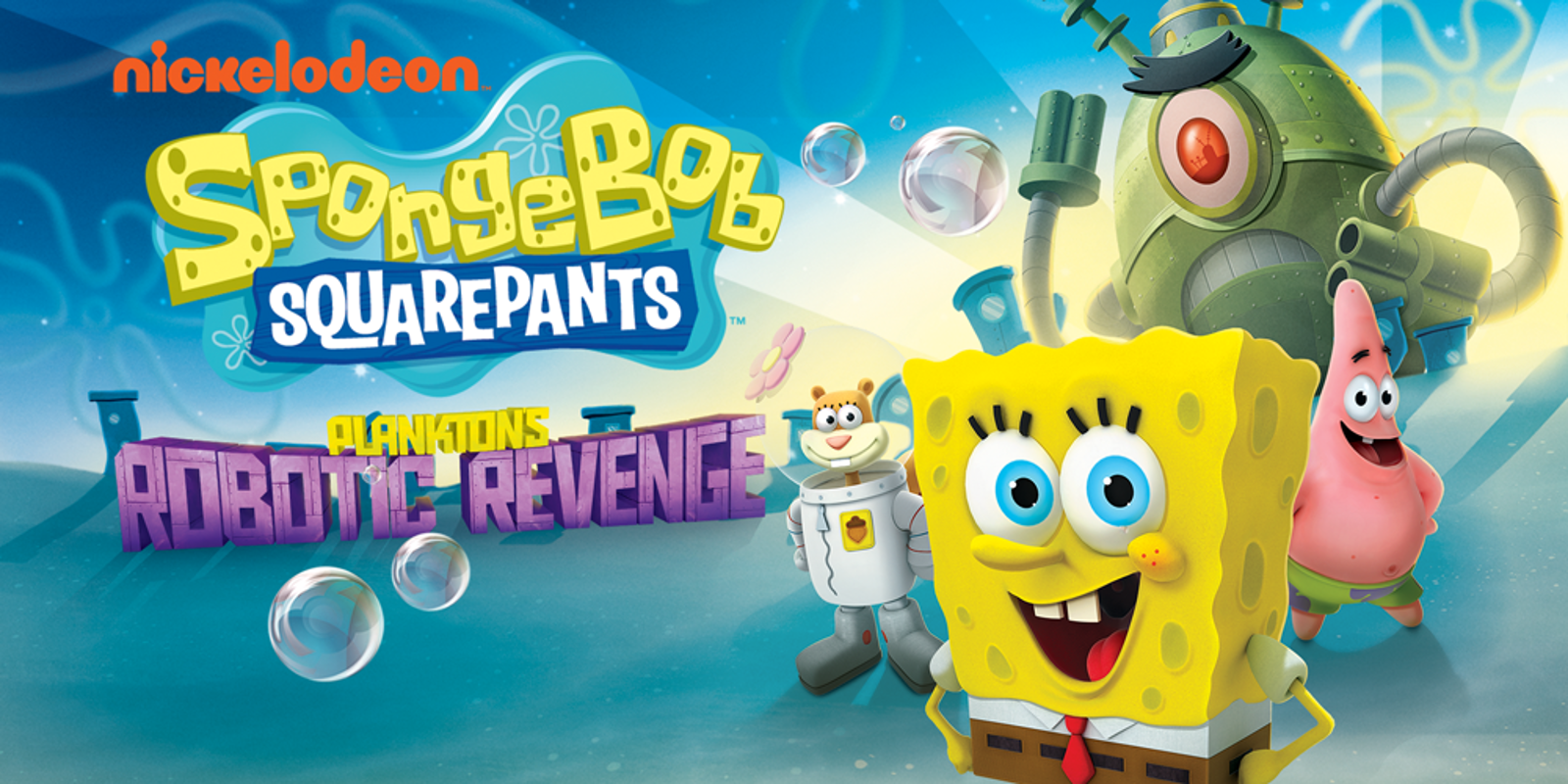
The rise of stylized adventure games has sparked renewed interest in fan-favorite franchises, and few brands have embraced the 3D format as successfully as spongebob 3d. Colorful, comical, expressive, and visually cohesive, SpongeBob-inspired 3D games have become benchmarks for how character-driven, stylized adventures should look and feel. Their charm lies not only in polished gameplay but also in expertly crafted character models, whimsical environments, and expressive animation that elevates humor and immersive storytelling.
The developers behind SpongeBob-themed 3D titles continue to prove how effective stylized art direction can be. By blending vivid palettes, clean silhouettes, and cartoon-driven physicality, they create worlds that feel both modern and nostalgic. Today, these games influence countless studios working with stylized IPs, inspiring a new generation of 3D puzzle, adventure, and platform titles that strive for the same level of clarity, energy, and personality found in spongebob 3d adventures.
The Popularity of SpongeBob-Themed 3D Games
A Beloved Franchise With Universal Appeal
SpongeBob has been a global cultural phenomenon for over two decades, and his move into 3D gaming only amplified that status. The character is instantly recognizable, his humor is easy to understand across languages and cultures, and the setting of Bikini Bottom is simple yet endlessly versatile. Children are drawn to the bright colors, expressive faces, and silly gags; adults connect through nostalgia and layered jokes they remember from the original show. This combination gives SpongeBob-themed 3D games a uniquely broad audience that many other franchises can’t easily match.
That universal appeal also makes these games ideal for shared play. Families can play together without worrying about tone, difficulty contrast, or stylistic mismatch: parents understand the references, kids enjoy the characters, and both groups find the visual style approachable. It’s a rare case where a game can feel like a continuation of a TV show everyone already knows, rather than a separate, unfamiliar experience. This emotional continuity significantly lowers the barrier to entry and increases the likelihood that players will give a SpongeBob 3D title a chance—even if they don’t typically play platformers or puzzle games.
At the same time, the franchise enjoys a constant presence in media: reruns, memes, social networks, and new content cycles keep SpongeBob relevant. That ongoing visibility strengthens the connection between fans and any new game release. When players see SpongeBob in a store page, trailer, or app listing, they already have a clear expectation of tone and quality, which directly contributes to higher interest and stronger engagement.
The Perfect Fit for Stylized 3D
The SpongeBob universe is inherently exaggerated: characters are elastic, objects distort with emotion, and underwater logic is delightfully inconsistent. This makes the IP a natural match for stylized 3D, where the goal is not realism but personality. In 3D, artists can push proportions, play with non-physical deformations, and give objects cartoon-like behavior without breaking immersion, because players already expect this kind of visual language from SpongeBob.
Stylized 3D also allows developers to keep visuals clean and readable, which is crucial for platform and puzzle gameplay. Simple, bold shapes make it easy to distinguish characters from the background, interactive props from scenery, and hazards from safe ground. SpongeBob’s square body, Patrick’s rounded starfish shape, and Squidward’s long, elegant silhouette all read instantly from any camera angle. This makes animation clearer, platforming more precise, and puzzle cues easier to decode.
From a production perspective, stylization provides a lot of flexibility. Artists can prioritize expressive facial rigs, strong silhouettes, and hand-crafted textures instead of chasing photorealistic detail. This means the team can invest more effort into fun motion, readable poses, and playful visual effects that support gameplay and humor. The result is a coherent visual experience where every element—from jellyfish and coral to buildings and props—feels like it belongs to the same world and supports the same comedic tone.
High Replay Value Through Humor and Exploration
SpongeBob-themed 3D games gain much of their longevity from the way humor and exploration intertwine. Levels are often filled with small jokes, visual gags, and character reactions that players may not notice on the first run. A background character might do something unexpected, a billboard might contain a subtle reference, or a prop might react in a surprising way when hit or interacted with. These details reward curiosity and encourage players to replay levels just to see what else the world has to offer.
Exploration is rarely just about collecting items; it’s about discovering personality baked into the environment. Hidden areas might contain secret dialogues, alternate animations, or unusual interactions that make the world feel more alive. Because SpongeBob’s universe is inherently playful, developers can place these secrets almost anywhere—behind a rock, on top of a building, inside a seemingly decorative element—without breaking consistency. Players get the sense that Bikini Bottom is full of surprises waiting to be uncovered.
Humor also softens the impact of failure. Missing a jump, choosing the wrong path, or misreading a puzzle doesn’t feel punishing when the consequence is a funny animation, a goofy sound effect, or a lighthearted comment from a character. This positive feedback loop makes experimentation safe and fun, which is crucial in 3D platform and puzzle spaces where trial-and-error is part of the core experience. Because players enjoy the process as much as the success, they’re more likely to revisit previous levels, try different approaches, and fully explore the game’s content—significantly boosting replay value.
The Role of Developers Behind SpongeBob-Style 3D Games
A Deep Understanding of Character-Driven Design
Developers responsible for SpongeBob-style 3D games must possess a strong grasp of character-driven storytelling. Unlike many platformers or puzzle adventures that rely largely on mechanics, SpongeBob-centered titles depend heavily on the personality and expressiveness of their cast. Every animation, idle loop, gesture, and reaction must feel unmistakably true to each character. This requires developers to understand not just the visual traits but the emotional rhythms and comedic timing that define the franchise.
Teams working on these games carefully analyze decades of character behavior—from how SpongeBob laughs to how Squidward moves when annoyed, to the exact way Patrick expresses curiosity. These nuances matter because players come in with preexisting familiarity. The slightest deviation from expected behavior can feel jarring, while perfect alignment creates instant delight. Developers often create custom animation rigs, refine facial expression libraries, and build character-specific interaction systems to ensure accuracy.
Beyond individual characters, developers design interactions between characters with equal care. Dialogue pacing, shared animations, co-op moments, and narrative beats must all respect the established chemistry of the cast. SpongeBob’s enthusiasm, Squidward’s sarcasm, and Patrick’s charming cluelessness must weave together naturally within gameplay. This deep attention to character coherence is one of the core reasons SpongeBob-style games feel so authentic, and why players respond so positively to them.
Technical Excellence in Stylized Rendering
Creating stylized 3D games that feel polished and energetic requires a high level of technical artistry. Developers must craft assets that look simple on the surface—but rely on sophisticated modeling and shading techniques underneath. Stylized rendering thrives on smooth curves, bold silhouettes, and textures that communicate form without clutter. Achieving this clarity takes a combination of hand-crafted artistry and technical rigor.
Developers optimize character models to support exaggerated movements: stretchy limbs, expressive faces, wide smears, and fast squash-and-stretch transitions. These behaviors demand careful topology planning so that the mesh deforms cleanly under extreme poses. Shaders must enhance the look with soft gradients, subtle rim lights, or toon-inspired outlines without overwhelming the viewer.
Lighting also plays a key role. In SpongeBob-like worlds, lighting must remain playful and high-contrast while still grounding characters within the environment. Ambient occlusion, color-graded shadows, and stylized reflections contribute subtle depth that prevents the world from looking flat. Developers balance these elements to create a cohesive visual identity where every scene feels vibrant, readable, and true to the franchise’s tone.
The technical execution becomes even more important when integrating physics-driven elements, environmental puzzles, and real-time interaction. Stylized objects still need to behave in ways that support gameplay clarity, meaning developers must test and refine physics behaviors, collision shapes, and animation blending to ensure everything feels both cartoonish and functional.
Engine Efficiency and Player Accessibility
Another crucial aspect of developing SpongeBob-style 3D games is ensuring broad accessibility. These titles often target large audiences that include children, casual players, and fans who may not have high-end devices. This makes optimization a core pillar of development.
To maintain smooth performance, developers streamline everything from polycount budgets to texture usage and animation complexity. They build levels with efficient culling, use LOD systems to reduce rendering costs, and apply lightweight shaders that maintain stylistic beauty without demanding unnecessary GPU power. Because SpongeBob games use bold colors and stylized geometry, developers can achieve visually striking results with relatively modest technical resources—if the pipeline is well-designed.
Accessibility also extends to gameplay. Developers craft intuitive navigation, clear camera behaviors, and readable puzzle layouts that avoid overwhelming younger players. Controls must feel responsive but not punishing, animations must clearly signal states, and interactive elements must be obvious without appearing overly simplistic. Achieving this balance requires constant refinement and playtesting across different skill levels.
The user experience is enhanced through thoughtful interface design as well. UI elements often mirror the cartoon’s playful aesthetic, but must remain legible and unobtrusive. Developers carefully adjust contrast, spacing, iconography, and animation pacing to ensure players—especially young ones—can quickly understand menus, prompts, and actions. The end result is a game world that feels welcoming to all ages, while still offering depth for older fans.
Art Direction in SpongeBob 3D Games: Why It Works So Well
The Language of Underwater Whimsy
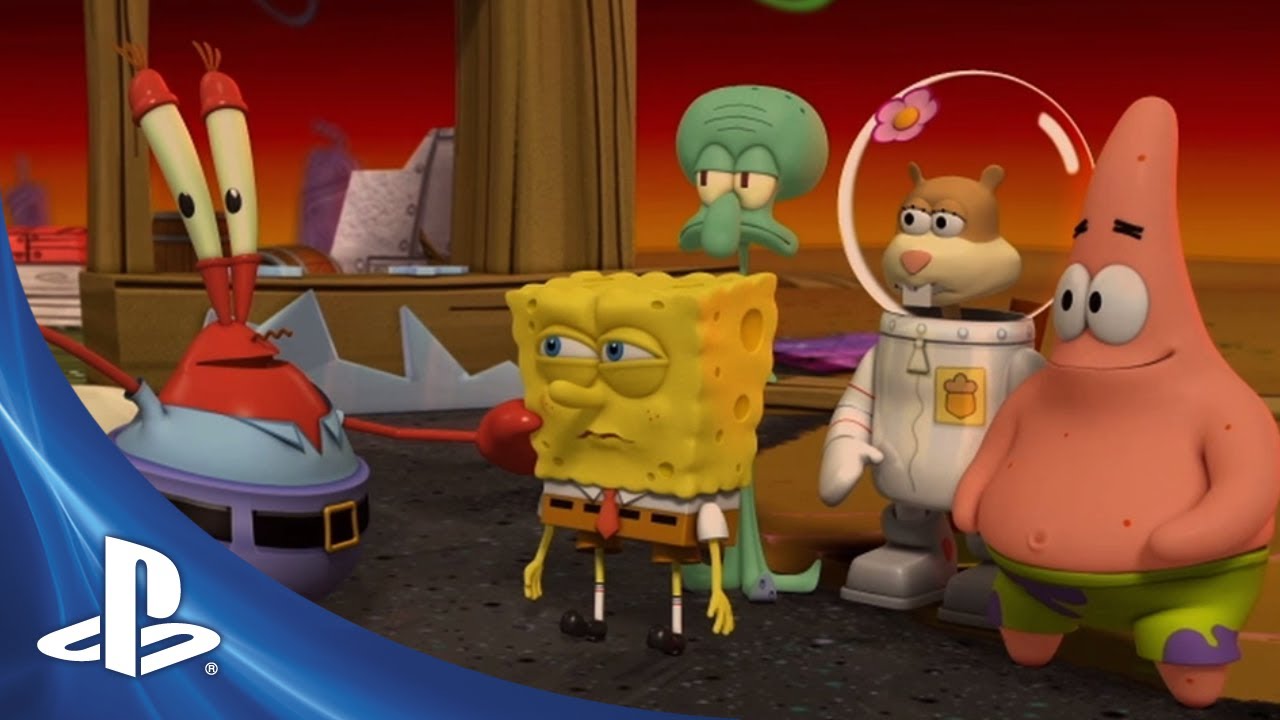
The SpongeBob universe thrives on a playful blend of surrealism and underwater charm, and art direction is what makes that combination work so naturally. Everything in Bikini Bottom bends the rules of physics, shape, and proportion, yet it all feels internally consistent because the visual language is unified. Bubbles drift with personality, coral formations curve in comedic shapes, and everyday objects—boats, shops, furniture—carry a quirky handmade quality that enhances the cartoon look.
In 3D games, this whimsical underwater logic becomes even more powerful. Artists can manipulate scale, distortion, and movement to create environments that invite exploration without ever appearing overwhelming. Buildings may tilt, stretch, or wobble slightly, giving each area a lively feel. Props can float or sway softly as though suspended in water, reinforcing the setting even when characters jump, run, or interact with the world at a fast pace. These artistic liberties make environments feel dynamic and humorous, turning each location into an extension of the characters’ personalities.
The underwater theme also supports creative level design. Designers can incorporate translucent textures, glowing sea plants, unusual rock shapes, and colorful marine life that function both as decorations and interactive elements. Because the world is intentionally exaggerated, players readily accept surprising mechanics—levitating platforms, unconventional architecture, and strange puzzle devices—without questioning realism. This artistic elasticity is key to maintaining a joyful tone while still offering meaningful gameplay variety.
Clean, Readable Silhouettes
A core strength of SpongeBob-style 3D art direction is the absolute clarity of silhouettes. In games where exploration, platforming, and object interaction play major roles, players must quickly identify characters and props from multiple angles. The stylized proportions of SpongeBob’s universe practically guarantee perfect readability: SpongeBob’s square frame, Patrick’s star shape, and Squidward’s elongated limbs stand out even in crowded scenes.
This clarity extends to environmental objects as well. Puzzle elements, switches, bouncing pads, and collectible items are shaped in ways that instantly communicate their purpose. A lever is oversized and exaggerated, a platform has a unique curve or bounce effect, and breakable objects often feature distinct patterns or outlines. Artists avoid unnecessary detail, ensuring the viewer doesn’t get confused about what matters and what doesn’t.
Readable silhouettes also enhance animation. Characters can convey emotion or direction through exaggerated poses, which become even more visible because their shapes are simple and distinct. This helps players interpret gameplay cues: a character leaning toward an object might imply interactivity, while a wide-open stance could signal readiness or excitement. Silhouette-driven clarity is an essential part of the SpongeBob 3D identity because it delivers both stylistic charm and mechanical functionality.
Color as Communication
Color is another anchor of SpongeBob’s visual storytelling, and 3D games use it with remarkable precision. Bright, saturated palettes dominate the world, creating a cheerful and inviting atmosphere that immediately attracts players of all ages. Yet these colors are not applied randomly—they follow clear rules that support visibility, gameplay flow, and emotional tone.
Warm tones, such as yellows, oranges, and pinks, often highlight important objects or draw attention to active zones. For example, coral-colored markers may outline paths, or brightly lit platforms may signal areas where the player should interact. Cool blues and soft greens often fade into the background, helping players distinguish between foreground action and environmental decoration. This controlled use of color ensures that players never feel visually lost, even when environments are dense with stylized assets.
Lighting further enhances color communication. Soft gradients, playful rim lights, and underwater haze effects contribute to mood without overwhelming clarity. Small VFX elements—sparkles, bubbles, neon glows—serve not only aesthetic purposes but also hint at hidden mechanics or collectibles. SpongeBob’s world is inherently vivid, but skilled art direction channels that vibrancy into a functional gameplay language.
In puzzle-heavy segments, color coding helps differentiate layers of logic. A blue switch might correspond to blue platforms, or glowing purple outlines might indicate objects tied to a specific mechanic. These color-based systems feel natural because they blend into the existing cartoon palette instead of appearing like intrusive UI overlays. The result is a visually joyful environment where color supports both emotion and understanding.
Animation as the Heart of Humor and Gameplay
Exaggerated Reactions
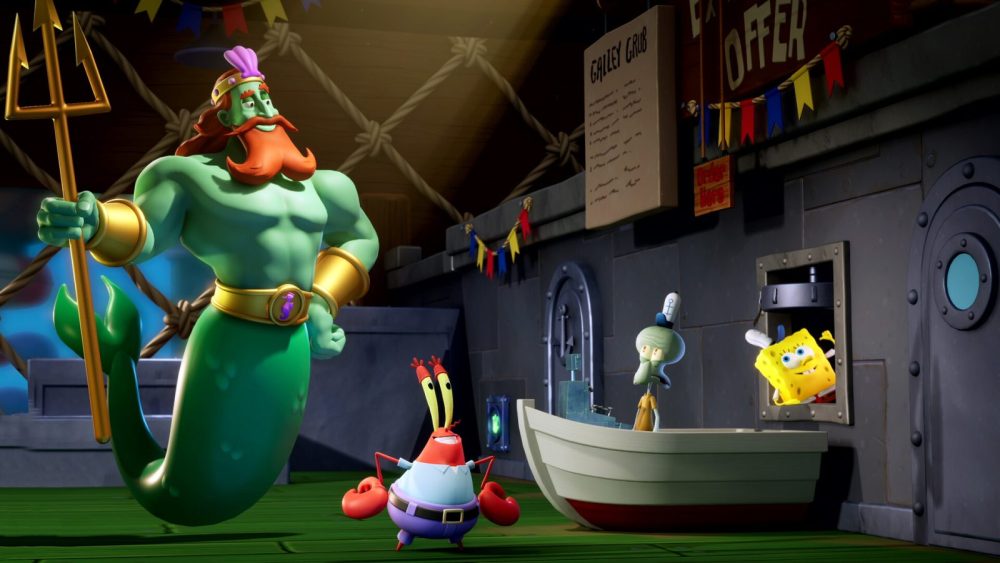
Exaggeration is the lifeblood of SpongeBob-style animation, and in 3D games it becomes a central pillar of both humor and gameplay clarity. Characters don’t just move — they perform. Every jump, spin, wobble, or stumble is pushed far beyond realistic constraints, turning routine actions into comedic highlights. SpongeBob might stretch like rubber before launching into a jump, Patrick might squash dramatically when landing, and Squidward’s entire face may contort in a theatrical expression of annoyance. These visual exaggerations help players instantly read emotions and intentions, making even minor actions feel delightfully entertaining.
Beyond humor, exaggerated reactions play a mechanical role. When players make a mistake, the animation softens the frustration by turning it into a funny, unexpected moment. A character might slip, bounce, or react with a goofy expression instead of simply failing. This transforms the trial-and-error process — essential in platform and puzzle games — into something joyful rather than punishing. By celebrating imperfection through comedy, developers encourage experimentation, and players feel more confident exploring tricky mechanics or complex level layouts.
Exaggeration also helps emphasize the physics of the SpongeBob universe. Because the world thrives on surreal underwater logic, characters can bend, warp, or stretch without breaking immersion. These distortions bridge the gap between cartoon expectations and 3D gameplay, making every movement feel uniquely alive. Players come to anticipate humorous reactions, which deepens engagement and solidifies the identity of the game’s personality.
Character-Motion as a Hint System
One of the most effective — and often overlooked — uses of animation in SpongeBob-inspired games is its ability to guide players without relying on text or intrusive UI. Motion naturally draws attention, so developers use animated gestures, poses, and reactions as visual hints. This creates a subtle but powerful communication channel. For example, if SpongeBob glances repeatedly at a nearby lever, the player instinctively knows it’s important. If Patrick tilts his head toward a puzzle element in confusion, the player might realize they need to investigate it more closely.
Idle animations also serve as cues. A character fidgeting near a path, tapping a foot next to a button, or performing a curious-looking animation loop can guide the player toward the next objective. These hints fit seamlessly within the world because they come from characters behaving naturally, not from on-screen arrows or flashing markers. This technique maintains immersion while improving accessibility, especially for younger or casual players who benefit from visual guidance.
Animation can also convey gameplay logic. An object may jiggle slightly when approached, telegraphing that it’s interactive. Platforms might bounce before moving, indicating readiness. Puzzle elements might glow or pulse rhythmically to suggest timing mechanics. All of these micro-movements act as in-world hints, reducing confusion and creating a stronger sense of flow. Because the guidance is playful and character-driven, it deepens the charm of the experience rather than distracting from it.
Environmental Animation
SpongeBob-style 3D games flourish thanks to lively environments filled with expressive animation. Coral reefs sway as if breathing, kelp plants wiggle when characters pass by, bubbles drift upward with personality, and background fish perform unpredictable loops that add charm to every scene. These environmental behaviors make the world feel active rather than static, reinforcing the illusion that Bikini Bottom is a place full of life, humor, and whimsical physics.
Environmental animation does more than add atmosphere; it can shape gameplay. Dynamic elements like moving platforms, rotating coral structures, bouncing jellyfish pads, or flowing water currents often serve as interactive components of puzzles and traversal sequences. Their motion is crafted to be readable and rhythmic, so players can predict timing and movement without frustration. Because the environment behaves according to its own playful rules, developers can introduce clever mechanics — such as riding a drifting bubble stream or timing jumps with a swaying sea plant — that remain consistent with the world’s personality.
Even subtle ambient animations contribute to immersion. Particles react to character movement, underwater lighting shifts softly as players explore, and background props may interact with physics in surprising ways. Sometimes these animations hide secrets or enhance discovery — a cluster of animated bubbles may reveal a secret area, or a wobbling object might hint at a hidden collectible. These touches reward attentive players and make exploration feel meaningful.
The combined effect of all this environmental animation is a world that feels not only visually rich but emotionally expressive. Movement becomes storytelling. The environment becomes a character. And the boundary between gameplay and humor blurs into a seamless, delightful experience that defines SpongeBob-style 3D adventures
Games Similar to SpongeBob 3D in Style and Quality
Bright, Stylized 3D Adventures
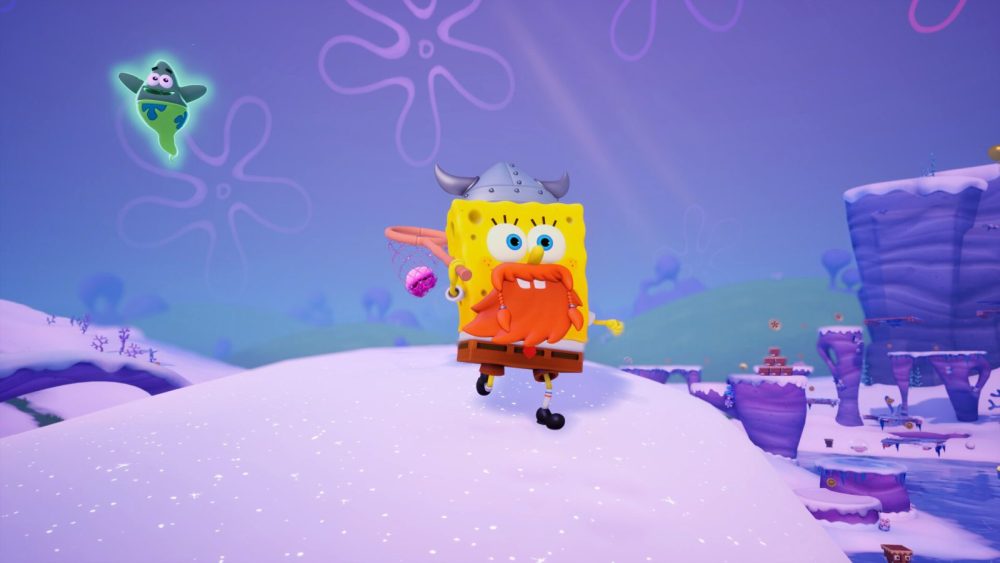
Many modern 3D adventure titles share the same colorful energy, bold shapes, and expressive animation principles that define SpongeBob-style games. These projects rely on readability, exaggerated motion, and vibrant palettes to create worlds that feel playful and emotionally engaging. Classics like Crash Bandicoot and Ratchet & Clank continue to influence this space with their sharp silhouettes, prop-driven interactions, and cartoon-oriented physics. Their environments are built with clearly defined platforms, dynamic hazards, and whimsical objects that serve as both scenery and functional gameplay elements.
What makes these games comparable to SpongeBob-inspired titles is their shared focus on personality. Characters move with charm, levels pulse with visual rhythm, and each area introduces new mechanics wrapped in delightful animation. Even when the themes differ — futuristic sci-fi in Ratchet & Clank or jungle chaos in Crash Bandicoot — the underlying artistic philosophy remains similar: stylized exaggeration delivers clarity and joy.
Newer titles like Super Lucky’s Tale and A Hat in Time reinforce this trend by embracing hand-crafted textures, soft outlines, and bouncy character rigs. These games excel at making navigation intuitive, using lighting and shape language to guide the player subtly through puzzles, collectibles, and platforming challenges. Their success shows that stylized 3D is far more than a nostalgic throwback — it is a powerful aesthetic that resonates with modern audiences and mirrors the heart of what makes spongebob 3d adventures special.
Humor-Driven Platform and Puzzle Titles
One of the closest creative neighbors to SpongeBob-inspired games are titles that prioritize humor as much as gameplay. These games use slapstick animation, expressive facial rigs, and playful environmental gags to create experiences that feel lighthearted and approachable. Luigi’s Mansion 3 is a strong example, with its charming ghost reactions, exaggerated physics, and character-driven comedy woven into every puzzle moment. Players are rewarded not only with progress but with delightful animations that enrich the simple act of exploring a room.
The Rayman series — especially its modern reimaginings — also offers a comparable sense of animated vibrancy. Characters stretch, squash, and glide in ways that feel fundamentally cartoonish, yet every motion is fine-tuned for readability and precise control. This blend of expressive motion and tight mechanics is exactly what underpins SpongeBob-style design.
Many indie puzzle-platformers embrace this philosophy as well. Their humor can appear in unexpected animations, quirky idle loops, or exaggerated item interactions. Even a simple action like pulling a lever or stepping on a pressure plate can be transformed into a comedic beat. These titles show that humor doesn’t have to be separate from gameplay — it can be part of the mechanics. This is one of the hallmarks of great SpongeBob-style 3D design: the idea that every interactive moment can carry personality, charm, and a touch of silliness.
Modern Cartoon-Inspired Games
A wave of contemporary games continues to push cartoon stylization in 3D forward, proving the longevity and versatility of this aesthetic. These titles take familiar principles — bold outlines, colorful shading, expressive characters — and expand them with modern rendering techniques, dynamic lighting, and improved animation pipelines. Many of these games are developed by hybrid indie–AAA teams that combine creative experimentation with professional production quality, resulting in visually stunning worlds that echo the charm found in SpongeBob-themed adventures.
These modern titles often incorporate environmental storytelling and puzzle-driven exploration similar to SpongeBob-inspired game design. Levels feel hand-crafted, with visual humor embedded directly into props, signs, NPC animations, or environmental reactions. The cartoon aesthetic offers the perfect balance between accessibility and creative freedom, making these games appealing to a wide demographic — from casual players to dedicated adventurers.
Importantly, this new generation of games proves that stylized 3D art can achieve high emotional impact without realism. Soft gradients, playful shading models, expressive rigs, and cleverly exaggerated environments are all hallmarks of both SpongeBob’s universe and contemporary cartoon-style titles. As more developers embrace stylization, we see games that match (and sometimes exceed) the animation richness, environmental personality, and whimsical tone that fans love about spongebob 3d experiences.
These similar titles reinforce the broader movement toward visually expressive, humor-driven, stylized 3D worlds — a movement that SpongeBob-inspired games helped popularize and continue to influence today.
Looking Ahead: The Future of SpongeBob-Style 3D Games
Developers continue to refine stylized rendering, dynamic physics, and expressive animation, making future SpongeBob-inspired titles even more immersive. With the growing demand for vibrant cartoon aesthetics and accessible gameplay, this niche will only expand. More studios will experiment with exaggerated rigs, comedic VFX, and bright underwater environments — striving to capture the same energy that makes spongebob 3d games unforgettable.
Studios producing stylized 3D art are increasingly valuable, especially those collaborating with top publishers to deliver consistent, polished assets across environments, characters, and animation pipelines. One such studio is AAA Game Art Studio, known for hidden object art, slot game art, and high-quality 2D/3D content for global markets — and a trusted partner for teams seeking stylized 3D puzzle and adventure visuals.
To discuss stylized art production or request custom 3D assets for your own character-driven game, reach out to AAA Game Art Studio.
Contacts
Contact Information
Please use contact information below. If you want to send us a message, please use our contact form to the right and we will respond promptly.
Social links: